
Best Books from South Korea
South Korea's literary tradition has produced books of international significance spanning fiction, poetry, and non-fiction. The country's writers have engaged with its history, geography, and social realities in ways that have found readers far beyond its borders, and its place in world literature is secure.
Top 10 from South Korea
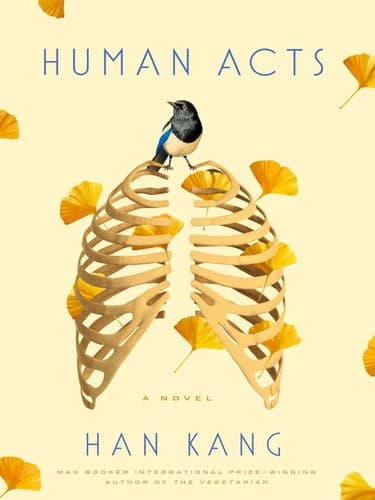
Human Acts
Multiple voices—the living and the dead—speak from the Gwangju Uprising of 1980, when South Korean students rose against martial law and were brutally suppressed. Han Kang's novel is a meditation on the human capacity for violence and for compassion.
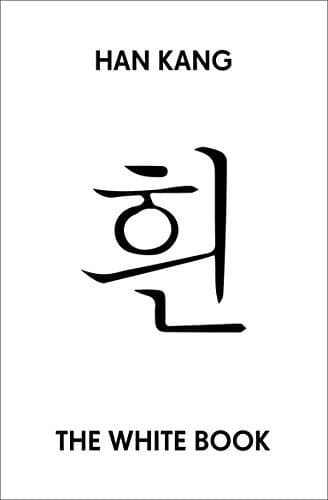
The White Book
A meditation on whiteness—snow, bones, salt, linen—structured as a series of fragments that circle around the death of the narrator's sister shortly after birth. Han Kang's prose poem-novel is her most formally experimental work.
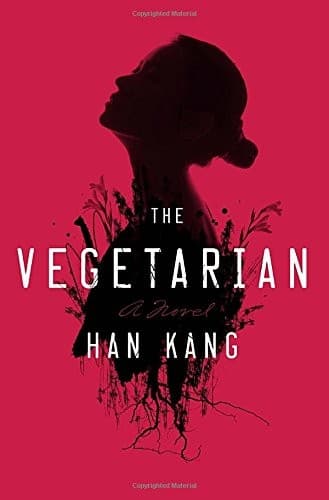
The Vegetarian
After a disturbing dream, Yeong-hye refuses to eat meat—a decision that her family, husband, and brother-in-law interpret as mental illness and an act of rebellion to be overcome. Han Kang's Man Booker International Prize-winning novel is a harrowing exploration of bodily autonomy and patriarchy.

Kim Ji-young, Born 1982
Kim Ji-young, Born 1982 is a landmark novel that sparked significant cultural conversations in South Korea about gender inequality and societal expectations. Through the life of Kim Ji-young, an ordinary woman, the book explores the systemic sexism and discrimination faced by women in modern Korean society. Its straightforward narrative and relatable protagonist have resonated with readers, making it a bestseller and a catalyst for discussions on feminism.
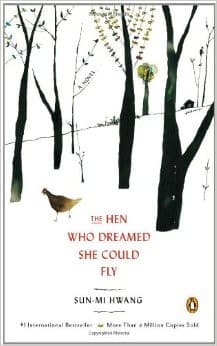
The Hen Who Dreamed She Could Fly
This beloved fable tells the story of a hen named Sprout who dreams of a life beyond laying eggs in captivity. Her journey to freedom and self-discovery is a poignant allegory about the pursuit of dreams, individuality, and the courage to break free from societal constraints. The book's universal themes and charming narrative have made it a favorite among readers of all ages.
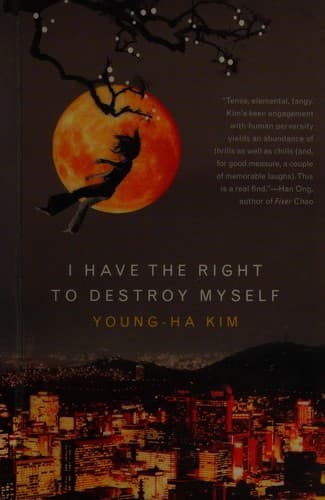
I Have the Right to Destroy Myself
In this provocative novel, Kim Young-ha explores themes of existentialism, art, and the human psyche through the lens of a narrator who assists people in ending their lives. The book delves into the complexities of life and death, identity, and the search for meaning in a modern, urbanized world. Its philosophical depth and narrative style have earned it critical acclaim.

Our Twisted Hero
Our Twisted Hero is a powerful allegory about power, corruption, and conformity, set in a classroom environment. The story follows a young boy who transfers to a new school and encounters a class bully who maintains control through manipulation and fear. This novel is a critique of authoritarianism and the societal structures that enable it, making it a significant work in Korean literature.
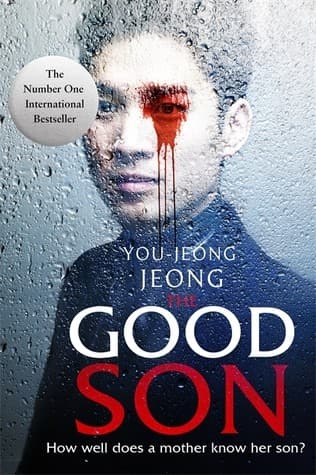
The Good Son
The Good Son is a psychological thriller that delves into the mind of a young man who wakes up to find his mother murdered. As he pieces together the events leading up to her death, the novel explores themes of memory, identity, and the nature of evil. Jeong You-jeong's gripping narrative and exploration of the human psyche have made this book a standout in the genre.
Please Look After Mom
An elderly Korean woman goes missing at Seoul Station and her family—each narrating from their own perspective—must confront all that they never knew about her and all they failed to give her. A devastating portrait of the invisible labour of mothers.