Best Books from Japan
Japanese literature offers two great traditions in constant dialogue: the classical refinement of Murasaki Shikibu, Matsuo Bashō, and the court poets, and the cosmopolitan modernity of Soseki, Mishima, Kawabata, Oe, and Murakami. The Japanese novel has a distinctive relationship to the interior life — to loneliness, impermanence, and aesthetic sensitivity — that sets it apart from Western fiction. Haruki Murakami has brought Japanese literature to a global mass readership, but the quieter voices — Banana Yoshimoto, Yoko Ogawa, Hiromi Kawakami — are equally essential to understanding a literary culture of extraordinary range.
Top 10 from Japan
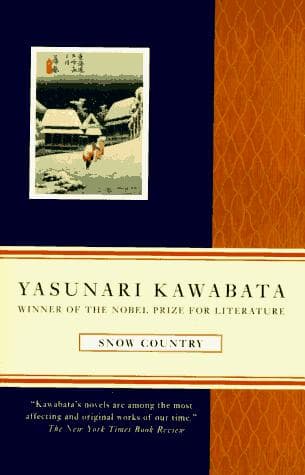
Snow Country
A wealthy Tokyo dilettante travels to a remote mountain hot-spring town and falls into a hopeless love affair with a geisha. Kawabata's first major novel is celebrated for its haiku-like prose style and its evocation of Japanese aesthetics, mono no aware, and the transience of beauty. It was central to his Nobel Prize as a supreme example of Japanese literary spirit.
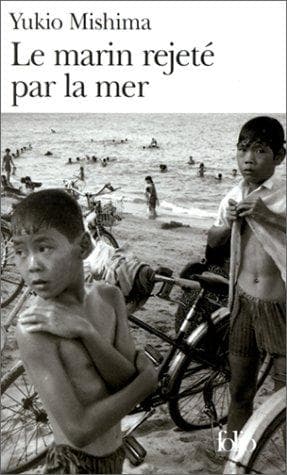
The Sailor Who Fell from Grace with the Sea
A widow falls in love with a sailor while her thirteen-year-old son, part of a nihilistic gang of boys, grows to see the relationship as a betrayal of ideals. Mishima's disturbing novel of beauty, violence, and disillusionment is a modern Japanese classic—spare, elegant, and deeply unsettling.

The Makioka Sisters
Four sisters of a declining Osaka merchant family navigate the search for a husband for the third sister against the backdrop of a rapidly changing prewar Japan. Tanizaki's leisurely, observant masterpiece captures an entire world on the cusp of disappearing. Often compared to the great Victorian family novels, it is considered his finest achievement.
The Temple of the Golden Pavilion
Mizoguchi, an ugly, stuttering young Buddhist acolyte, becomes obsessed with the beauty of the Golden Pavilion at Kinkaku-ji and burns it down. Based on a real event, Mishima's novel is a meditation on beauty, destruction, and the relationship between art and violence.
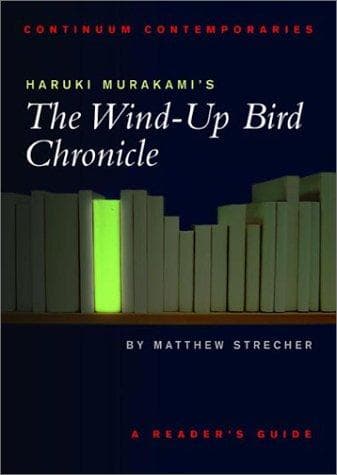
The Wind-Up Bird Chronicle
Toru Okada searches for his missing cat—and then his missing wife—in a mystery that expands to encompass World War II atrocities in Manchuria and a strange woman at the bottom of a well. Murakami's most ambitious and disturbing novel.


Moll Flanders
Moll Flanders (1722) establishes Daniel Defoe as a significant voice in literary fiction, weaving together themes of identity, memory, and transformation.
Foul Lady Fortune
A beloved work of fantasy, Foul Lady Fortune by Chloe Gong (2022) has enchanted generations of readers with its magical storytelling.

Goethe's Werke
Goethe's Werke (1800) by Johann Wolfgang von Goethe is an intimate and revealing memoir that illuminates the human experience through personal narrative.

Sämtliche Werke
Published in 1800, Sämtliche Werke by Johann Wolfgang von Goethe is a compelling biographical work that brings its subject vividly to life.
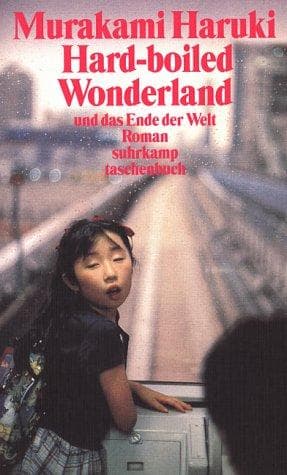
Hardboiled Wonderland and the End of the World
Two narratives—one a near-future cyberpunk thriller, one a dreamlike medieval fantasy—intertwine to explore the nature of consciousness and self. Murakami's most formally daring early novel won the Tanizaki Prize.