Best Books from France
France has shaped literary modernism more decisively than any other country. Proust's cathedral of time and memory, Flaubert's clinical social dissection, Camus's existential clarity, Beckett's stripped-down absurdism — these are the coordinates of 20th-century fiction worldwide. The French tradition prizes intellect, style, and philosophical seriousness in equal measure, and its major prizes — the Prix Goncourt, the Prix Femina — remain the most closely watched in European publishing. Contemporary French literature, from Michel Houellebecq's provocations to Annie Ernaux's autofiction, continues to set the terms of international literary debate.
Top 10 from France

The Elegance of the Hedgehog
Renée Michel, a self-educated Paris concierge who hides her love of philosophy and art behind a frumpy exterior, finds an unlikely ally in twelve-year-old Paloma, a suicidal child of wealthy tenants. Barbery's charming, intellectually rich novel became a worldwide phenomenon, beloved for its meditation on beauty, class, and the examined life.
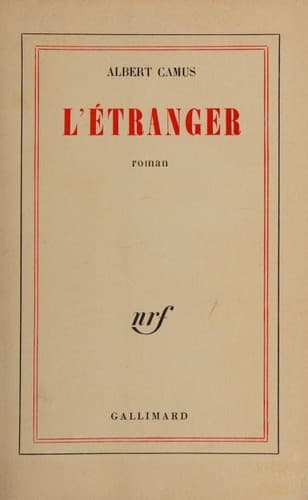
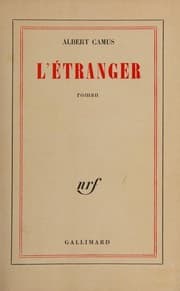
The Stranger
Meursault, an emotionally detached Frenchman in colonial Algeria, kills an Arab man on a beach and faces trial less for the murder than for his failure to grieve his mother. Camus's existentialist novella is a foundational text of absurdist philosophy and remains one of the most widely read French novels worldwide.
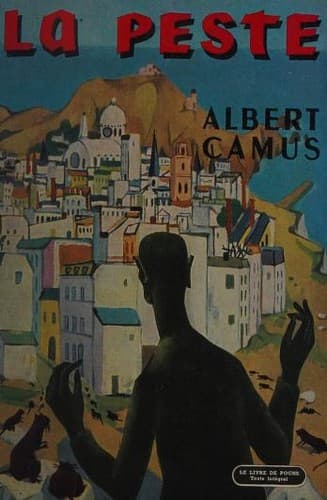
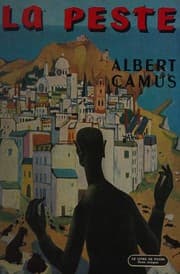
The Plague
Bubonic plague descends on the Algerian city of Oran, and a doctor records the town's response in Camus's great allegorical novel of solidarity and resistance. Written partly as a response to Nazi occupation, it argues for human fellowship as the only answer to absurdity and death. Its relevance surged again during the COVID-19 pandemic.
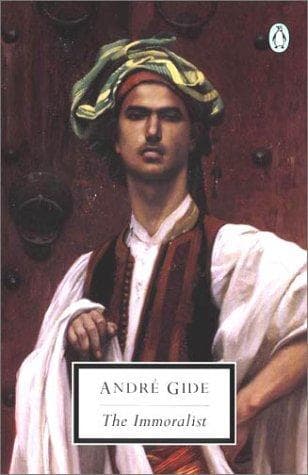
The Immoralist
André Gide's 'The Immoralist' is a profound exploration of self-discovery and moral ambiguity. The novel follows Michel, a young scholar who, after recovering from a severe illness, embarks on a journey to live life according to his desires, challenging societal norms. Gide's work is notable for its introspective narrative and philosophical depth, questioning the nature of freedom and responsibility.

Les trois Mousquetaires
A celebrated work of literary fiction, Les trois Mousquetaires by Alexandre Dumas (1844) offers an unflinching examination of the human condition.
Hrabě Monte Cristo. Díl 1 a 2 (třísvazkové vydání)
A celebrated work of literary fiction, Hrabě Monte Cristo. Díl 1 a 2 (třísvazkové vydání) by Alexandre Dumas (1830) offers an unflinching examination of the human condition.
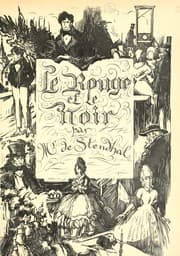
Le rouge et le noir
Le rouge et le noir (1830) establishes Stendhal as a significant voice in literary fiction, weaving together themes of identity, memory, and transformation.
Vingt ans apres̀
Published in 1800, Vingt ans apres̀ by Alexandre Dumas is a landmark work of literary fiction that explores the complexities of human experience with depth and nuance.
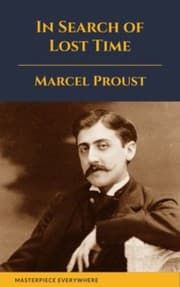
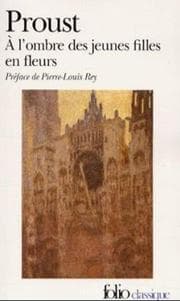
À la recherche du temps perdu
A celebrated work of literary fiction, À la recherche du temps perdu by Marcel Proust (1919) offers an unflinching examination of the human condition.

The Count of Monte Cristo
Edmond Dantès, falsely imprisoned for fourteen years, escapes and returns as the mysterious Count of Monte Cristo to exact elaborate revenge on those who betrayed him. Dumas's inexhaustible adventure novel is one of the most popular in world literature.



![Cover of La dame aux camélias [novel]](/_next/image?url=https%3A%2F%2Fcovers.openlibrary.org%2Fb%2Fid%2F14565226-M.jpg&w=3840&q=75)